Address
304 North Cardinal
St. Dorchester Center, MA 02124
Work Hours
Monday to Friday: 7AM - 7PM
Weekend: 10AM - 5PM
Address
304 North Cardinal
St. Dorchester Center, MA 02124
Work Hours
Monday to Friday: 7AM - 7PM
Weekend: 10AM - 5PM
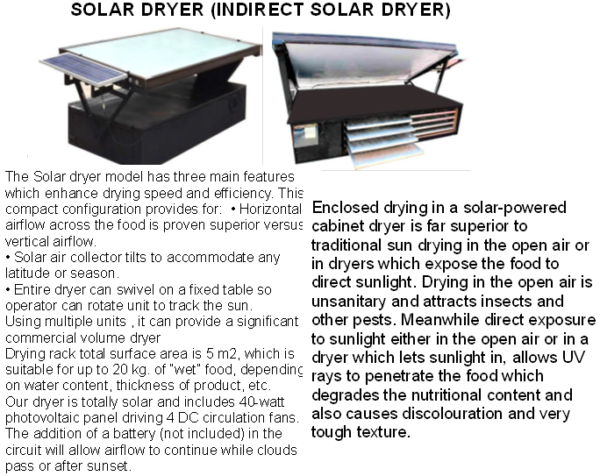
Indirect Solar Dryers differ from direct dryers with respect to heat transfer and vapour removal. The crops in these indirect solar dryers are located in trays or shelves inside an opaque drying cabinet and a separate unit termed as solar collector is used for heating of the entering air into the cabinet. The heated air is allowed to flow through/over the wet crop that provides the heat for moisture evaporation by convective heat transfer between the hot air and the wet crop. Drying takes place due to the difference in moisture concentration between the drying air and the air in the vicinity of crop surface. The advantages of indirect solar drying are:
They are, however, relatively elaborate structures requiring more capital investment in equipment.
Indirect Solar Dryers differ from direct dryers with respect to heat transfer and vapour removal. The crops in these indirect solar dryers are located in trays or shelves inside an opaque drying cabinet and a separate unit termed as solar collector is used for heating of the entering air into the cabinet. The heated air is allowed to flow through/over the wet crop that provides the heat for moisture evaporation by convective heat transfer between the hot air and the wet crop. Drying takes place due to the difference in moisture concentration between the drying air and the air in the vicinity of crop surface. The advantages of indirect solar drying are:
They are, however, relatively elaborate structures requiring more capital investment in equipment.

Reviews
There are no reviews yet.