Address
304 North Cardinal
St. Dorchester Center, MA 02124
Work Hours
Monday to Friday: 7AM - 7PM
Weekend: 10AM - 5PM
Address
304 North Cardinal
St. Dorchester Center, MA 02124
Work Hours
Monday to Friday: 7AM - 7PM
Weekend: 10AM - 5PM
On Wednesday, 13th August 2025, the Federal Government approved the establishment of nine new private universities across the country, and this will raise the number of private universities from 159 to 168. In the interim, the total number of universities including Federal and state owned is 298 according to National University Commission (NUC) website. In another breath, the government announced a seven-year moratorium on the establishment of new federal universities, polytechnics, and colleges of education.
This decision aims to halt the unchecked proliferation of under-utilised institutions, which has led to inefficiencies, poor infrastructure, inadequate staffing, and declining student enrollment across the country’s federal tertiary education system.
The Minister of Education, Dr. Tunji Alausa who made the announcements said, that access to tertiary education in Nigeria is no longer a major issue. He, however stated that the duplication of federal institutions has spread resources too thinly, resulting in some universities operating far below capacity.
The fact of the matter is that our university education is non-functional education for parasitic existence. The worst is that some of the universities especially the private owned are nothing but glorified secondary schools.
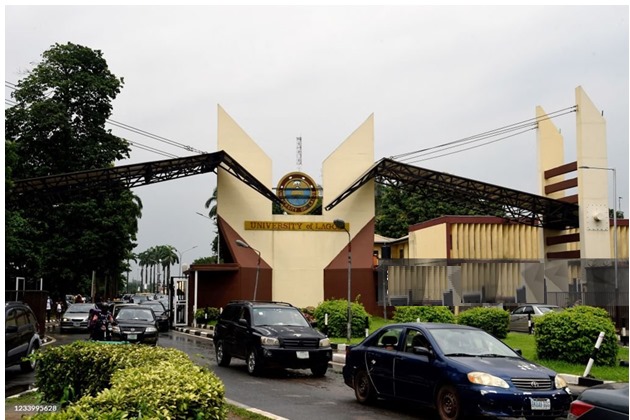
None of Nigeria’s 297 universities made the top 1,000 in the 2026 Quacquarelli Symonds World University Ranking for the third consecutive year. According to the rankings, which featured 1,501 institutions from 106 locations worldwide, only three Nigerian universities made the list. The University of Ibadan and the University of Lagos appeared in the 1,001–1,200 range, while the Ahmadu Bello University was in the 1,201–1,400 range.
In comparison, two South African universities made the top 300: the University of Cape Town ranked 150th, and the University of Witwatersrand was placed 291st. Twenty Egyptian universities made the 2026 list, followed by South Africa’s 11, and Tunisia’s four.
The poor showing of Nigerian universities reflects the dire state of tertiary education and the broader education sector. In the 1950s to 1980s, Nigerian universities ranked high, attracting international students and fostering institutional collaborations. However, years of neglect have eroded these achievements.
Nigerian universities education system has not been functional because too much
emphasis has been placed on theoretical and academic knowledge. There is also undue
emphasis on the possession of certificates instead of on what one can do. Through this process of education, the products acquire knowledge and facts with little real understanding and without saleable skills.
Functional education stands for practicality and utility. It makes people to fit into the society and to function effectively. A good quality university education system is one that provides all students with capabilities they require to become economically productive, develop sustainable
livelihoods, contribute to peaceful and democratic societies and enhance individual wellbeing.
When graduates of our country’s educational institutions can independently practice what they learnt in school without waiting for office or government jobs, more jobs will be created and income enhanced. The technological revivals that will follow will also positively lead to industrial revolution which will lead to more job opportunities.